
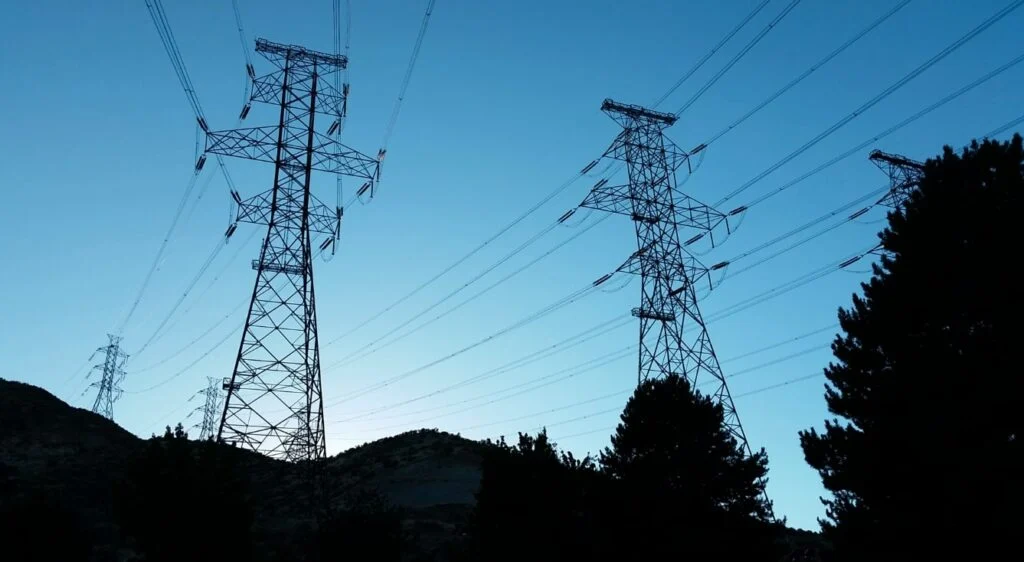
Following the successful deployment of time-dependent transmission right (TDTR) contracts that freed up over 9 GW of high-voltage network capacity during low-demand periods, Dutch grid operator Tennet is preparing to assign approximately two-thirds of these connection opportunities to battery energy storage facilities.
The implementation of TDTR agreements by Tennet this year brought renewed optimism to over 70 GW worth of clients - predominantly utility-scale battery storage developments - that have been waiting in the grid connection backlog. Recent data indicates that battery storage projects will receive the majority of this newly available network capacity.
Tennet's assessment shows that as much as 9.1 GW of transmission capability exists on the high-voltage network during non-peak periods - infrastructure that can be efficiently harnessed through TDTR arrangements.
These contracts provide clients linked to Tennet's high-voltage infrastructure with transmission access for a specified annual duration, guaranteed for no less than 85% of operating hours. The arrangement covers both electricity procurement and delivery. For the remaining 15% of time, Tennet retains authority to partially restrict electricity purchases or injections, particularly during anticipated demand surges. The operator must provide customers with at least 24-hour advance notice of such limitations.
This framework proves especially valuable for organizations capable of flexible energy consumption, including battery storage facilities, industrial processors, and businesses operating backup power systems. Tennet's analysis suggests that adaptable grid customers could achieve savings of up to 65% on transmission fees by combining TDTR agreements with strategic utilization of time-variable pricing structures.
During his presentation at the Energy Storage Global Conference in Brussels last week, Bob Ran, business developer flexibility, strategy and partnerships at TenneT, disclosed that approximately two-thirds of TDTR allocation will support battery storage, enabling roughly 6 GW of developments. Nevertheless, over half of the battery project applications might not secure their complete requested allocation, potentially requiring developers to reduce project scales.
Numerous project developers continue awaiting confirmation from Tennet regarding their TDTR approval status. Ran indicated that clarity on these decisions should emerge by year-end.
Ran further highlighted that TenneT's Netherlands connection pipeline currently encompasses approximately 60 GW of battery storage capacity, while the country's existing peak demand reaches about 20 GW. His September 1, 2025 pipeline update showed 4.1 GW of projects advancing to the implementation stage - where developers have commissioned TenneT to construct grid connections at costs reaching millions of euros. An additional 29 GW of battery storage developments remain in preliminary design phases.
Tennet projects that 5-7 GW of battery storage capacity will achieve economic viability by 2030. The company's 2050 projections anticipate between 14-27 GW of transmission-connected battery systems throughout the Netherlands.
While TDTRs offer encouraging prospects, the Dutch battery storage industry confronts substantial obstacles, including missing national storage objectives, absent capacity markets, and insufficient financial incentives. Project developers also navigate severe grid congestion, elevated transmission costs, and no special provisions for battery systems, creating expensive and complicated large-scale implementation conditions. However, roughly 1 GW of battery storage facilities currently operate, reflecting the industry's measured yet consistent expansion.
Newsletter
Join 20,000+ investors, industry leaders, and innovators shaping the future of the energy sector. Get expert insights and exclusive to investment opportunities delivered straight to your inbox monthly. Subscribe now and stay ahead of the market.